



Apple’s next big software moment is here.
WWDC 2026 begins June 8, and TechRepublic is following the announcements as Apple lays out what’s next for iOS, macOS, iPadOS, watchOS, visionOS, developer tools, and Apple Intelligence.
We’ll update this live blog as news breaks, sessions unfold, and Apple’s plans come into sharper focus.
- Apple adds more health and fitness features to Apple Watch
- Apple Wallet will use AI to split bills and manage passes
- Apple says its next software updates will make apps feel faster
- watchOS 27 drops support for several Apple Watch models
- Siri AI will be delayed on iPhone and iPad in the EU
- Passwords can now help fix weak logins with a tap
- Image Playground adds photorealistic images and new iPhone customization options
- Apple Intelligence brings new AI help to accessibility tools
- New App Store tools help developers improve their app promos
- App Store subscriptions get more flexible for businesses and teams
- Xcode 27 brings AI coding agents into Apple development
- New AI frameworks give developers more ways to build intelligent apps
- macOS 27 ‘Golden Gate’ brings AI upgrades, leaves Intel Macs behind
- Apple finally delivers its long-delayed Siri AI overhaul
- Apple Intelligence comes to home security footage
- Apple expands parental controls across devices
- Liquid Glass gets more flexible, macOS gets a speed boost
- What to know before WWDC 2026
- Live Updates
Apple adds more health and fitness features to Apple Watch
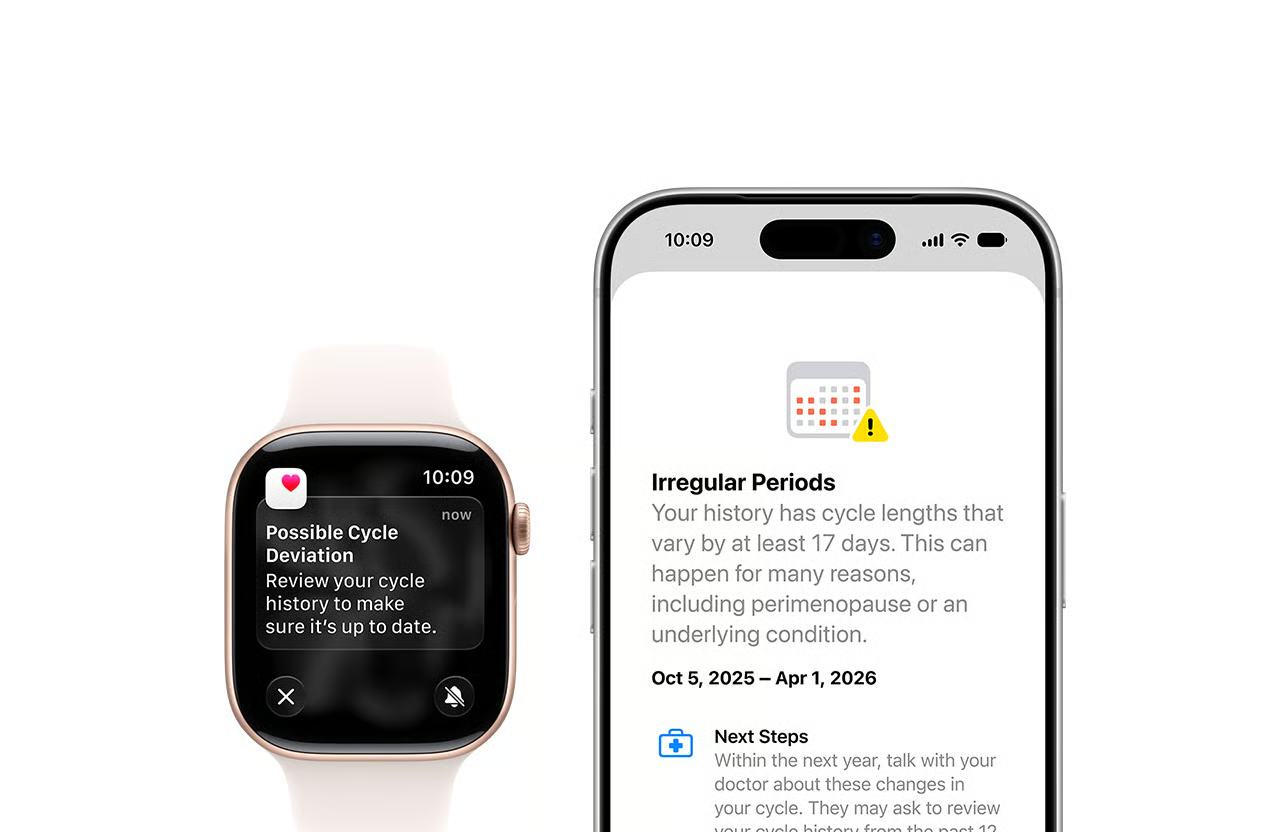
Apple is expanding Apple Watch health and fitness tools with new Workout Buddy insights, more accurate indoor run and walk tracking, and Spanish-language support.
Workout Buddy will now offer motivation based on pace, distance, and workout duration, even without an iPhone nearby. Apple is also adding perimenopause and menopause support to Cycle Tracking in the Health app.
Apple Wallet will use AI to split bills and manage passes
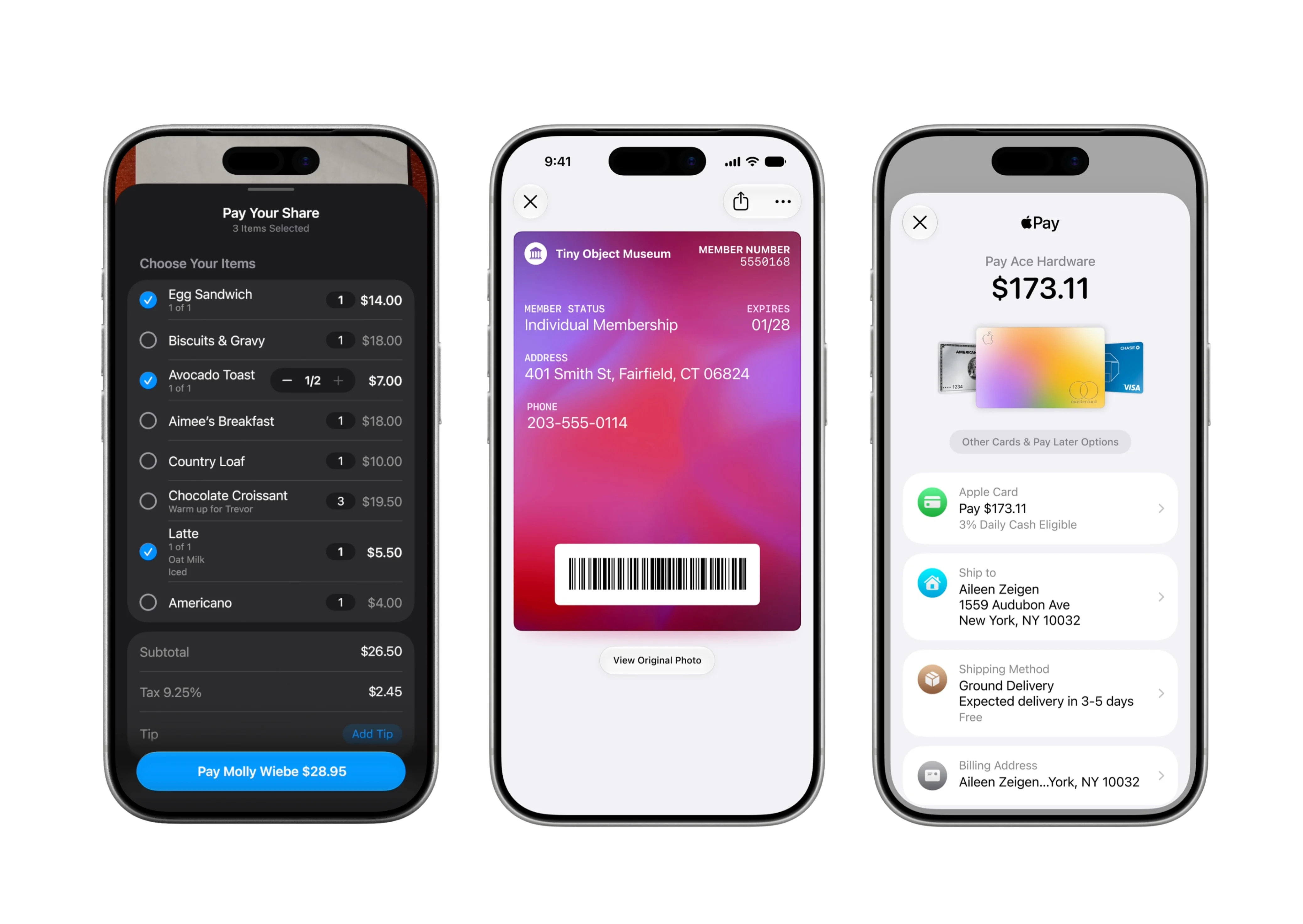
Apple is adding new Apple Wallet features in iOS 27 that use Apple Intelligence to handle everyday payments and passes.
Users can scan or upload a receipt to split a bill with Apple Cash, with Wallet calculating each person’s items, tax, and tip. Apple Wallet will also let users create passes from physical loyalty or membership cards and offer expanded hotel key details.

Apple is adding several interface updates to Apple Watch, including a dynamic app grid with five Siri-suggested apps and a new tap gesture for opening Smart Stack widgets.
The company is also consolidating Find Devices, Find Items, and Find People into a new Find My app. Apple Maps is getting an enhanced Flyover experience that uses AI with aerial imagery for more detailed visuals.
Apple says its next software updates will make apps feel faster

Apple is focusing on smoother, more responsive user experiences across its 2027 software updates, with faster app launches, photo loading, AirDrop transfers, and file browsing.
The company said iPhone and iPad apps will open up to 30 percent faster, while photos can load up to 70 percent faster after capture. On Mac, Apple is also bringing back familiar macOS design elements, including a more uniform toolbar across the top of apps.
watchOS 27 drops support for several Apple Watch models

Apple confirmed that watchOS 27 will only support Apple Watch Series 9 and later, Ultra 2 and later, and Apple Watch SE 3.
That means several models compatible with watchOS 26 will not get the update, including Apple Watch Series 6, Series 7, Series 8, the first-generation Apple Watch Ultra, and Apple Watch SE 2.
Siri AI will be delayed on iPhone and iPad in the EU
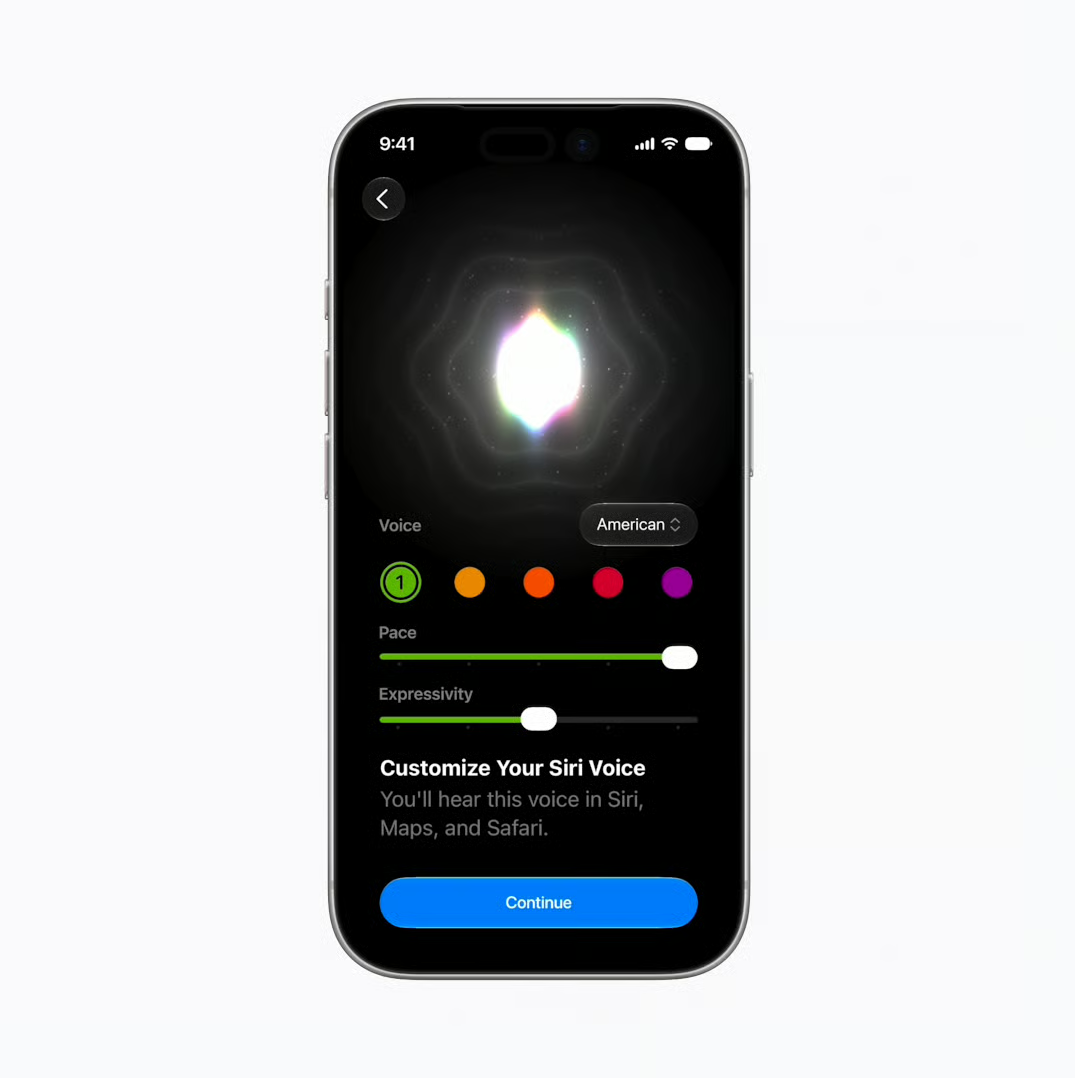
Apple says Siri AI will not be available on iOS 27 or iPadOS 27 in the European Union when the new software releases arrive later this year.
The company blamed the delay on the Digital Markets Act, saying EU regulators rejected its proposed approaches for supporting other virtual assistants while preserving privacy and security protections. Siri AI will still be available to EU users on macOS 27 and visionOS 27, but Apple said it does not currently have a timeline for bringing the feature to iPhone or iPad in the region.
Passwords can now help fix weak logins with a tap
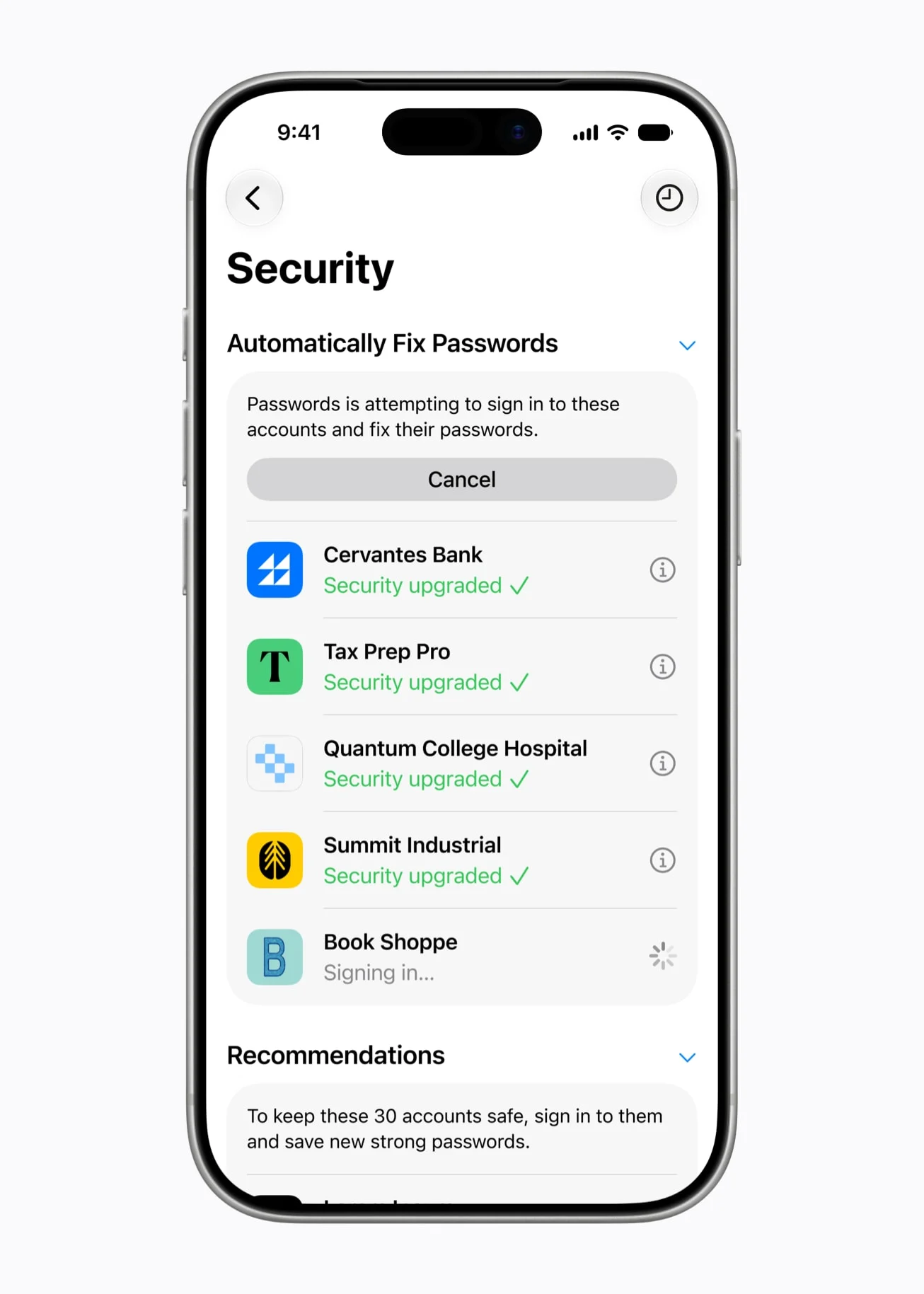
Apple is adding an AI-assisted way for users to upgrade weak or compromised passwords more easily.
The Passwords app can now work with Safari and Apple Intelligence to navigate supported websites and help replace vulnerable logins with strong passwords. Apple said the process is designed to happen securely and with a single tap, building on existing alerts for weak and compromised credentials.
Image Playground adds photorealistic images and new iPhone customization options

Apple is expanding Image Playground with photorealistic image generation and new ways to use AI-created visuals across the system.
Users can describe edits, tap, circle, or brush objects to adjust images, and generate visuals for Lock Screen wallpapers and Contact Posters. Apple said generated images will include a hidden SynthID watermark to identify them as AI-generated.
Apple Intelligence brings new AI help to accessibility tools
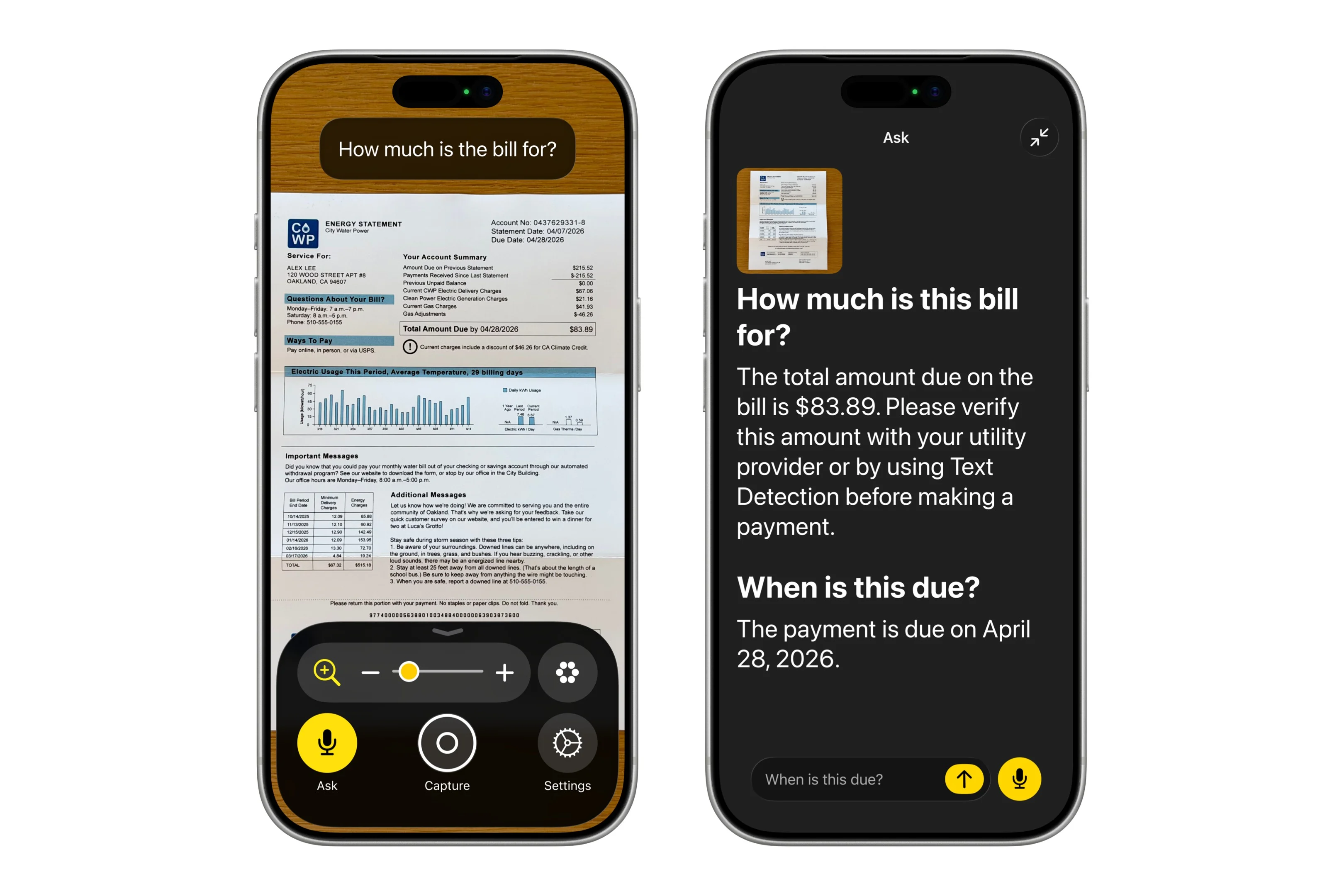
Apple Intelligence is powering new accessibility updates across VoiceOver, Magnifier, Voice Control, and Accessibility Reader.
VoiceOver and Magnifier can provide richer descriptions of images and surroundings, while Voice Control lets users describe onscreen buttons and controls instead of memorizing exact labels or numbers. Accessibility Reader is also gaining support for more complex source material, along with on-demand summaries and translation.
New App Store tools help developers improve their app promos
Apple is giving developers new App Store tools to market apps more flexibly and test what catches users’ attention.
The update adds Creative Assets, which let developers use richer images and videos in product page headers and search results, along with an Asset Library for managing screenshots, preview videos, and promotional materials in one place. Developers can also submit marketing assets for App Review separately from an app update, which could make seasonal campaigns and Apple Ads coordination easier to manage.
App Store subscriptions get more flexible for businesses and teams
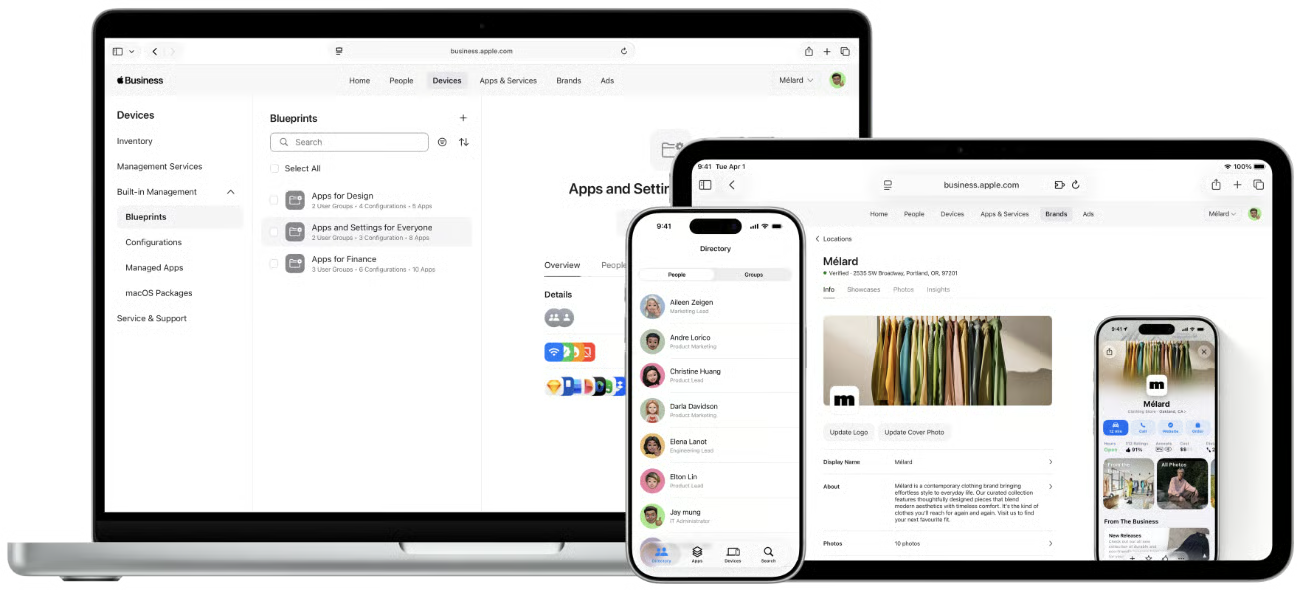
Apple is expanding App Store subscription options with new models for businesses, schools, teams, and multi-user groups.
Volume purchasing through Apple Business Manager and Apple School Manager will let enterprise and education buyers deploy subscriptions through existing device management workflows. Apple also plans to add group purchases, cross-developer App Store Bundles, and subscription Suites, giving developers more ways to package paid access beyond a single-user subscription.
Xcode 27 brings AI coding agents into Apple development
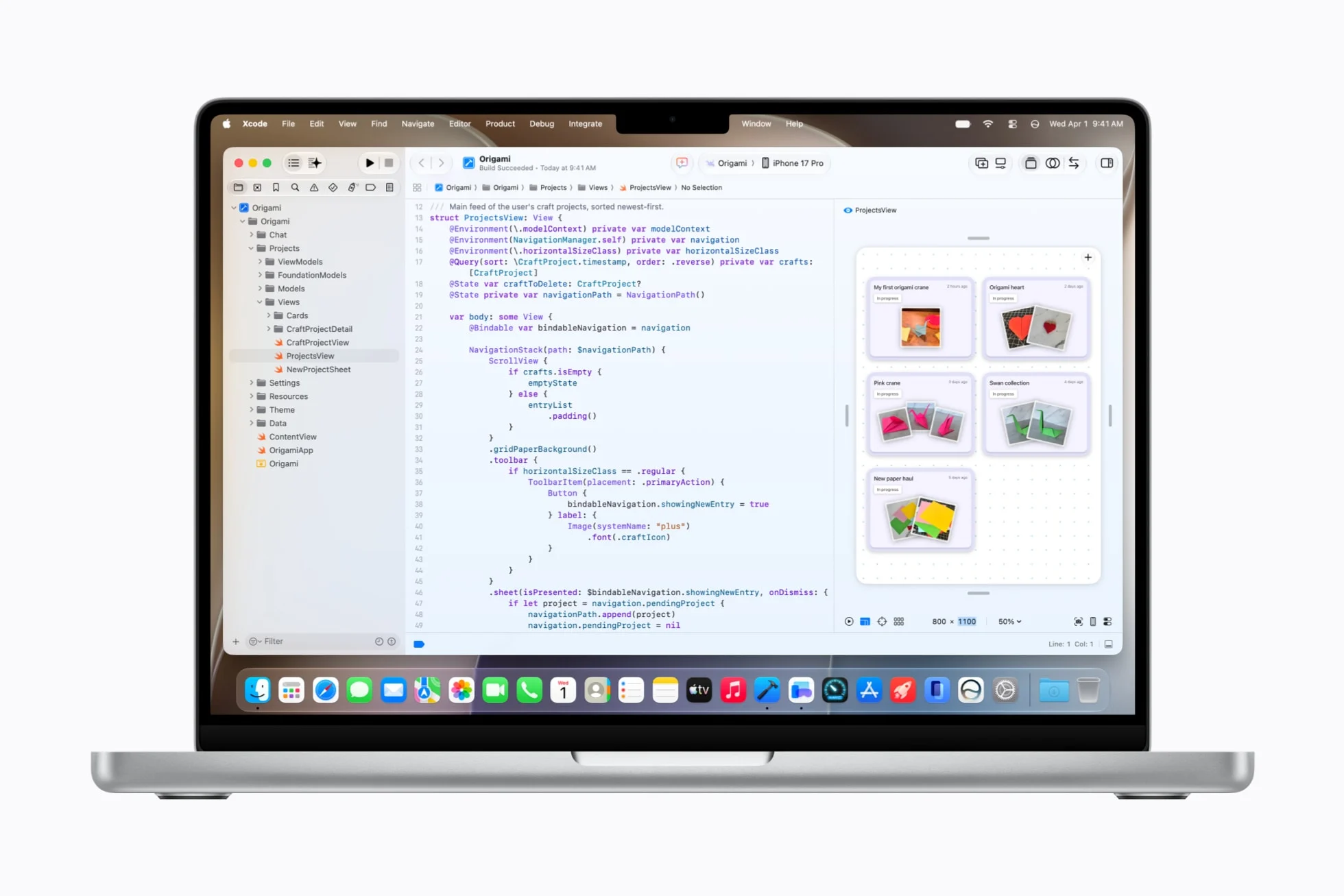
Xcode 27 is adding agentic coding features that bring models and tools from Anthropic, Google, and OpenAI directly into Apple’s development environment.
Apple said coding agents in Xcode can help with planning, multiturn Q&A, code changes, previews, tests, Playgrounds, and simulator interactions through the new Device Hub. The update also adds plug-in support, with GitHub and Figma among the first tools offering direct installation into Xcode.
New AI frameworks give developers more ways to build intelligent apps
Apple is giving developers more ways to add AI features to their apps through new intelligence frameworks and expanded model support.
The updated Foundation Models framework now supports on-device models, image input, server models, and custom skills through a native Swift API. Developers can also connect to models such as Claude and Gemini through a new language model protocol, while the new Core AI framework is designed to run custom models locally on Apple silicon.
macOS 27 ‘Golden Gate’ brings AI upgrades, leaves Intel Macs behind

Image: Apple
Apple unveiled macOS 27, codenamed “Golden Gate,” as the next major release for Mac. The update introduces deeper Apple Intelligence integration, including Siri AI inside Spotlight, Visual Intelligence features for analyzing on-screen content, and a rebuilt search system designed to index files, photos, and emails more quickly.
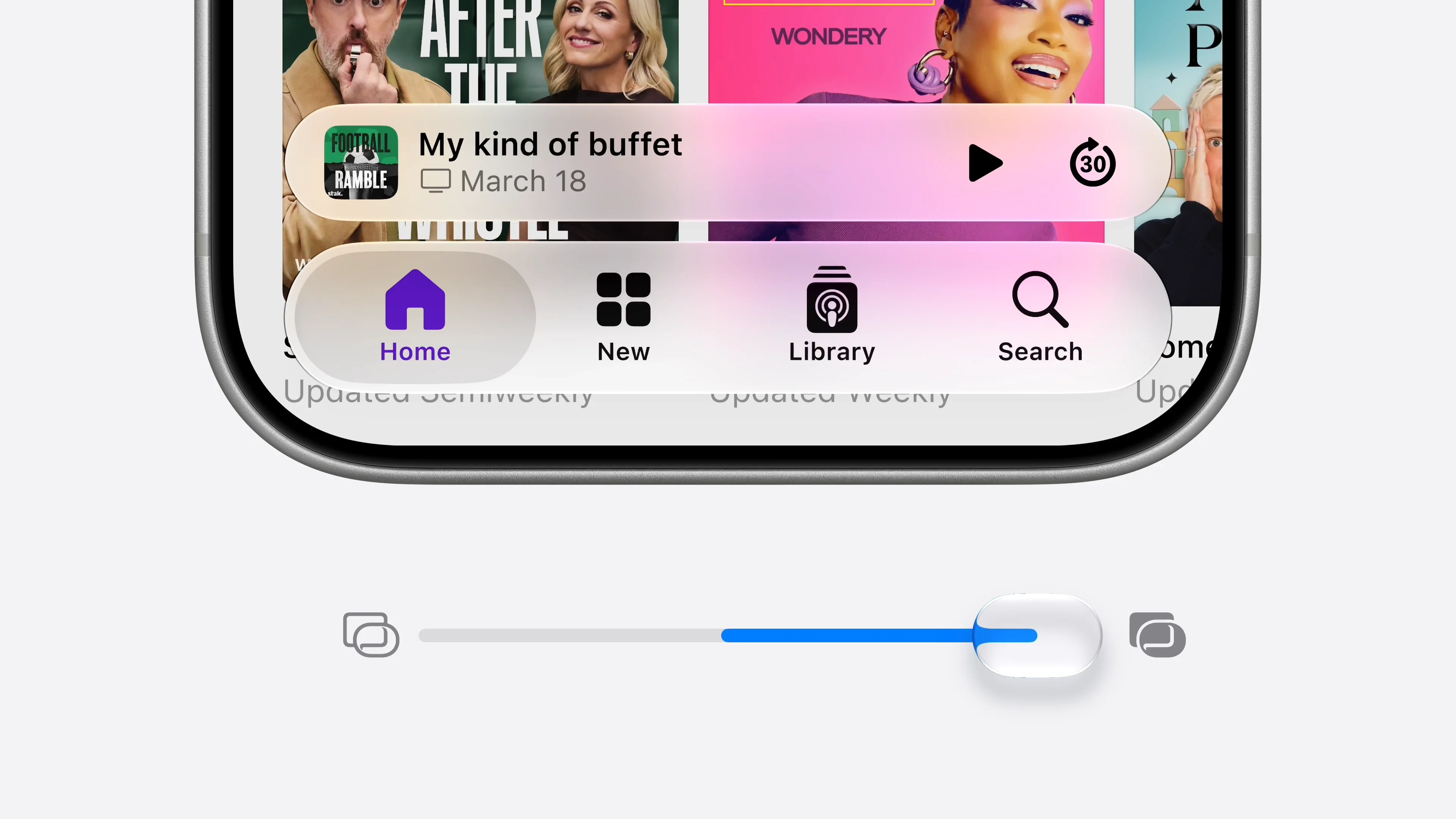
The release also includes refinements to Apple’s Liquid Glass design, including a new transparency slider that lets users adjust the visual effect to their preference. For Mac users, however, one of the biggest changes is what’s being left behind: macOS 27 drops support for Intel-based Macs entirely, making Apple silicon a requirement going forward.
Apple finally delivers its long-delayed Siri AI overhaul

Image: Apple
After months of anticipation and delays, Apple introduced a major overhaul of Siri at WWDC 2026, positioning the voice assistant as a more conversational, context-aware AI companion powered by Apple Intelligence.
The new Siri can better understand on-screen content, interact across apps, maintain conversation context, and perform more complex tasks on a user’s behalf. Apple also highlighted new privacy protections, with much of the processing handled on-device or through its secure cloud infrastructure.
The update is one of Apple’s most significant AI announcements to date and reflects the company’s effort to catch up with rivals such as OpenAI, Google, and Anthropic. Siri’s new capabilities will roll out in beta later this year, with Apple emphasizing a more natural user experience and deeper integration across its ecosystem of devices and services.
Apple Intelligence comes to home security footage

Image: Apple
Apple is bringing new AI-powered search and summarization features to its Home app, making it easier for users to review footage from compatible security cameras. During WWDC, the company said Apple Intelligence can now analyze recorded clips and generate descriptions that summarize what happened, helping users quickly understand activity around their home.
The update also improves search across multiple cameras. According to Apple, the Home app can surface the most relevant clips automatically and help users find specific events, such as a package delivery, without manually reviewing hours of footage.
Apple senior manager Cecilia Dantas said the enhanced system provides a deeper understanding of recorded activity, allowing users to search footage based on what was captured and quickly piece together events across different camera feeds.
Apple expands parental controls across devices

Image: Carlos Barria | Reuters
Apple announced new tools designed to help parents manage how children use its devices and access online content. A new digital setup assistant will guide parents through decisions about which apps children can use, how long they can use them, and other account-level restrictions.
The updates also extend approval requests across Safari on iPhone, iPad, and Mac, requiring children to ask permission before visiting certain websites.
“We’re giving parents powerful, easy to use tools to help manage what kids can see, who they can talk to, and when they have access,” Craig Federighi, Apple’s senior vice president of software engineering, said during the live presentation.
Liquid Glass gets more flexible, macOS gets a speed boost

Image: Carlos Barria | Reuters
Apple said it has refined Liquid Glass, the design language it introduced last year across iPhone, Mac, and other products. Users will be able to adjust transparency from fully clear to tinted, while text labels and toolbars have been tuned to be more readable and adaptable.
The company also said macOS has been optimized to open apps more quickly and feel more responsive. “We optimize the parts of the system that make a big difference in the responsiveness of our products,” Stacey Lysik, Apple’s vice president of OS Programs, said in the live announcement.
What to know before WWDC 2026
While Apple has kept its plans under wraps, several developments over the past few weeks offer clues about the themes that could dominate this year’s Worldwide Developers Conference.
Apple teases WWDC with “All systems glow”
Apple has promoted WWDC 2026 with the tagline “All systems glow,” a play on “all systems go.” The messaging has added to expectations that Siri and Apple Intelligence could be key themes during the keynote.
Apple has not said what the tagline means, but it arrives as interest grows around the company’s AI plans. TechRepublic recently examined how Siri’s AI comeback could run through Google and Nvidia.
Developers will be watching for new AI tools
WWDC often gives developers a closer look at the frameworks, APIs, and platform changes that will shape app development over the next year. New Apple Intelligence tools could be especially important for teams building AI features into business apps.
The key question is how much Apple opens those capabilities to developers. For related context, read TechRepublic’s coverage of how Apple Intelligence powers new accessibility features for iPhone and Mac.
Enterprise updates may arrive outside the spotlight
Some of WWDC’s most relevant business updates may come through developer sessions or technical documentation rather than the keynote itself. Device management, security, identity, and administration tools will be important areas to watch.
For IT teams, those details can shape day-to-day support and long-term device strategy. For more enterprise AI context, read TechRepublic’s coverage of Microsoft Project Solara and AI agents on enterprise devices.
The Intel Mac era is nearing its end
Apple recently confirmed that macOS 27 will drop support for Intel-based Macs, marking another major milestone in the company’s transition to Apple silicon. The update also signals the beginning of the end for Rosetta 2, the translation technology that has helped older applications run on newer hardware.
For organizations still managing Intel Mac fleets, the announcement raises important questions about upgrade timelines, software compatibility, and long-term support. TechRepublic has more on what macOS 27 dropping Intel Mac support means for users and IT teams.
Must-read Apple coverage
- Nearly 7 in 10 iPhone Owners Plan iPhone 17 Upgrade
- Apple Prepares AI-Powered Siri Upgrade With Google Search Integration
- Apple’s Xcode 26 Beta Now Supports GPT-5 and Claude
- Apple’s Vision Pro Adoption Stalled As Content Released ‘Drip by Drip’
Security remains a major focus
Beyond flashy software announcements, Apple enters WWDC amid a steady stream of security updates, patches, and vulnerability disclosures. Security enhancements often receive less attention than new features during the keynote, but they can have a significant impact on enterprise users and IT teams.
We’ll be watching closely for any announcements related to device management, privacy protections, identity security, and enterprise administration tools. For more context, catch up on TechRepublic’s latest Apple security roundup for June 2026.
Apple’s AI ambitions face a critical test
Much of the attention heading into WWDC centers on Apple Intelligence and the future of Siri. Reports suggest Apple is preparing major AI upgrades as it works to convince users, developers, and investors that it can compete with rivals that have moved aggressively into generative AI.
Whether Apple unveils new on-device capabilities, expanded developer tools, or a long-rumored Siri overhaul could shape the conversation throughout the week. TechRepublic recently covered how new M5-powered Macs and growing AI demand could factor into Apple’s next wave of growth.
Live Updates
Check back here for updates from Apple’s WWDC 2026 keynote and developer sessions.