


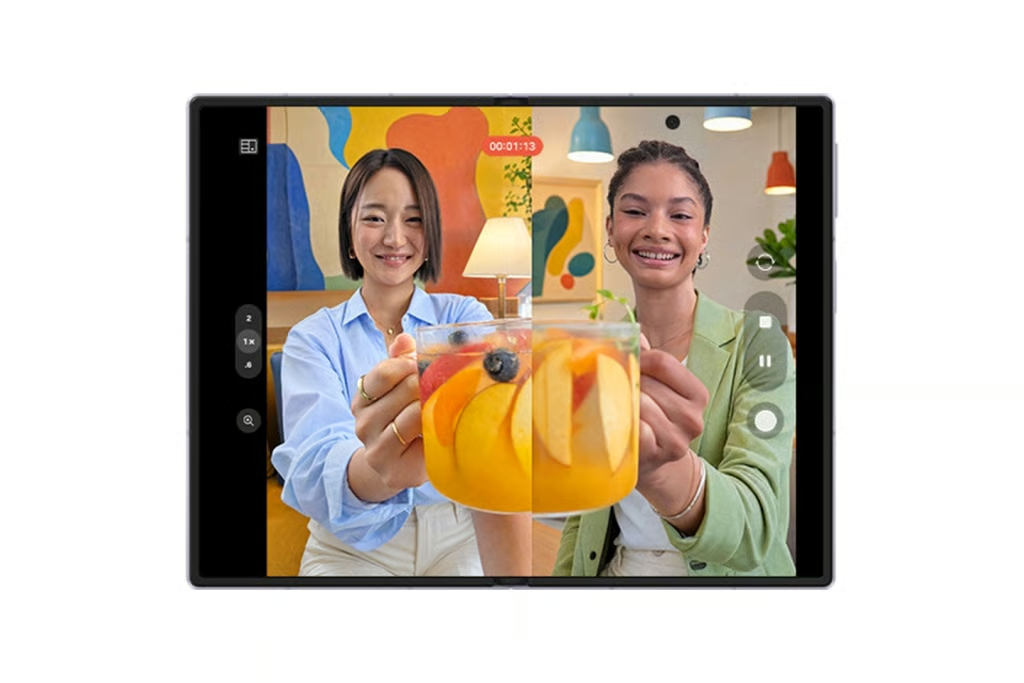
Samsung gave the Galaxy Z Fold 8 a wider folding screen, and the redesign also changed how its cameras fit into everyday use.
Android Authority reported Aug. 25 that the Fold 8’s inner selfie-camera cutout can cover content when the unfolded phone is rotated into portrait orientation. Three days earlier, SamMobile described another issue: several testers accidentally put a finger in front of the rear cameras while taking photos.
Neither report points to defective camera hardware. Instead, the complaints highlight how Samsung’s new Fold 8 shape affects everyday use, while the standard model’s lack of a dedicated telephoto lens limits its reach compared with the Fold 8 Ultra.
Camera placement creates new Fold 8 quirks
The Fold 8 uses a 7.6-inch, 4:3 folding display, making portrait orientation more practical than on Samsung’s earlier, squarer Fold designs. In testing, rotating the device could place the 10MP selfie-camera cutout directly over text, images, or video. Android Authority documented the issue in its Aug. 25 hands-on report.
The change follows the broader redesign Samsung introduced when it split its Fold lineup into the Fold 8 and Fold 8 Ultra in July.
Rear-camera placement creates another ergonomic concern. Multiple SamMobile staff members partly covered a rear lens with a finger while taking photos. A nearby finger could also reflect light from the flash and leave a reddish haze in the image, according to SamMobile’s Aug. 22 report.
SamMobile linked the behavior to the Fold 8’s shorter body and vertically arranged rear cameras. Samsung has not identified either placement complaint as a hardware defect.
The Ultra buys more camera reach
Samsung equips the standard Fold 8 with 50MP wide and 50MP ultrawide cameras. Its main sensor provides 2x optical-quality zoom using Adaptive Pixel technology, followed by digital zoom up to 10x. The Fold 8 Ultra adds a 200MP main camera and a dedicated 10MP telephoto with 3x optical zoom, according to Samsung’s camera comparison.
Samsung’s two-tier Fold strategy also turns camera capability into a pricing decision: buyers who want dedicated optical zoom have to move up to the Ultra. The company says its original Fold model evolved into the Fold 8 Ultra, while the standard Fold 8 was redesigned with an all-new shape.
Independent testing shows the standard model’s limits at longer distances. Tech Advisor found image quality noticeably declined beyond roughly 4x zoom, while HotHardware reached a similar result in its Aug. 14 testing.
The limitation is most noticeable at concerts, sporting events, or when photographing distant travel subjects. Google’s competing Pixel 11 Pro Fold, for example, includes a dedicated 5x telephoto, one of several differences in a recent comparison with the Galaxy Z Fold 8.
The camera differences have not prevented early demand. The standard Fold 8 accounted for nearly half of US reservations as Samsung’s latest foldables surpassed the previous Galaxy Z preorder record.
For buyers, those differences come down to how the Fold 8 is used. Its wider shape makes the folding display more versatile, while the camera layout and lack of a dedicated telephoto lens distinguish it from the more photography-focused Ultra.
Read more: Beyond camera hardware, the Fold 8 is also set to gain tap-to-share Quick Share, adding another proximity-based sharing option for personal and managed Android devices.