


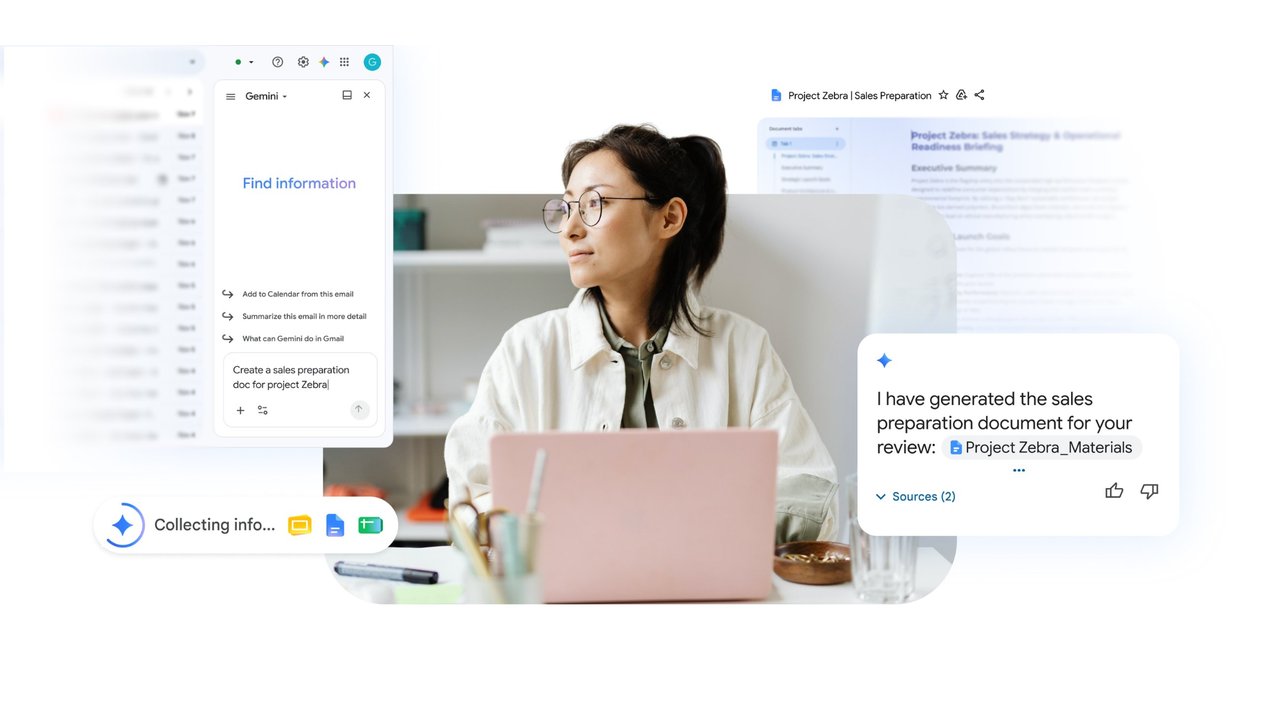
An AI agent tasked with summarizing emails probably doesn’t need permission to rearrange your entire inbox. Google is giving IT teams more control over how those agents interact with company data.
On Nov. 24, 2026, Google announced the general availability of its Workspace Model Context Protocol (MCP) servers and command-line interface (CLI), giving developers standardized ways to connect agents to Gmail, Drive, Docs and five other applications.
Businesses already using AI to retrieve documents or automate workflows may need to reconfigure existing integrations before new access requirements and billing rules take effect in 2027.
Giving AI agents access without giving up control
MCP is an open standard that lets AI agents interact with external tools. Google’s hosted MCP servers support cloud-based agents, while its CLI serves local computing environments. Developers can connect external agents to Workspace rather than relying solely on Google Gemini.
According to the Nov. 24 announcement, supported applications include Gmail, Drive, Docs, Sheets, Slides, Calendar, Chat and Tasks, with Keep support planned. All Workspace customers and developers are eligible for the two-week rollout that began Nov. 24.
The rollout follows Google’s October introduction of an enterprise AI agent that works across business applications. An agent’s OAuth permissions determine whether it can simply read a document or modify it. Developers must designate OAuth clients used for MCP access as agentic, separate from conventional application clients.
Google’s new enterprise security controls let administrators manage access and establish confirmation rules for sensitive operations. Existing user-level data loss prevention (DLP) policies also apply to agent interactions.
As the new audit logging capabilities roll out, administrators can track agent actions and user approvals, helping establish accountability for AI agents when something goes wrong. Granular restrictions for individual Gmail messages and Drive content are still in development.
The Workspace AI Tools Addendum takes effect Feb. 1, 2027. It prohibits developers from using covered data for model training or retaining it after an integration is disconnected or its access revoked.
Two deadlines IT teams can’t afford to miss
Starting Feb. 1, 2027, Google will enforce its MCP requirement for AI agent access. Under its published usage tiers and quotas, agents calling REST APIs directly will face Standard tier limits regardless of their selected tier. Conventional applications can continue using REST APIs.
Applicable Scaled tier billing begins April 1, 2027. The free Standard tier allows up to 5,000 daily MCP requests per project, per product, subject to per-minute limits.
Upgrading to the Scaled tier doesn’t automatically raise request limits. Developers still need an approved quota increase, and enrollment applies to the entire Google Cloud project.
Scaled tier Gmail, Calendar and Drive MCP usage is billed from the first successful request. An internal-use exception covers eligible non-agentic REST API projects, not MCP quota increases.
Administrators should prepare for both deadlines:
- Check permissions: Open Security > API Controls in the Google Admin console. Look for agents with editing permissions when they only need read access.
- Test approval rules: Use designated accounts to check whether sensitive actions trigger confirmation requests. Review the corresponding audit logs.
- Contact vendors: Confirm their MCP migration plans and data deletion practices.
- Estimate costs: Count requests, not just completed tasks. Some MCP tools make multiple API calls, so review actual usage and projected charges in the Google Cloud console.
Start with the agents your business would miss most if they stopped working. Check their permissions, migration plans and request volumes before Google’s new rules take effect.
Thinking about putting AI agents to work on your team? Explore AI courses from The Neuron Academy to build the skills to evaluate where agents can help and where you still need a human in the loop.