


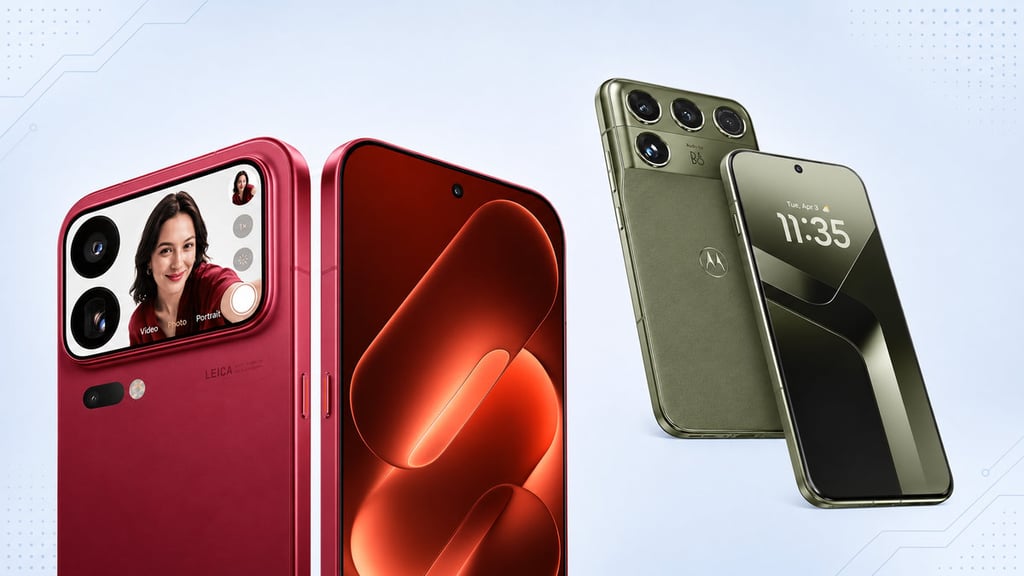
Xiaomi’s biggest battery advantage over Motorola could nearly disappear when its next flagship goes global.
Motorola detailed its Signature 27 on November 5, while Xiaomi will introduce the 18 Pro series internationally on November 17 in Paris. Both challenge Samsung’s Galaxy S26 Ultra with Qualcomm’s Snapdragon 8 Elite Extreme Gen 6 processor, ambitious cameras, and large batteries.
Xiaomi’s Chinese 18 Pro Max has 1,500mAh more battery capacity than Motorola’s phone. But reported European specifications could shrink that gap to just 50mAh. That puts cameras, software support, and pricing under greater scrutiny.
Xiaomi 18 Pro Max vs. Motorola Signature 27: Specs Compared
Motorola’s November 5 announcement confirmed a $1,599.99 US price, November 19 preorders, and November 26 sales. Xiaomi’s international launch campaign is underway, but final regional pricing and configurations remain unannounced. TechRepublic’s Xiaomi 18 Pro Max cheat sheet covers its Chinese-market configurations.
| Feature | Xiaomi 18 Pro Max (China) | Motorola Signature 27 |
|---|---|---|
| Display | 6.9-inch AMOLED, 120Hz | 6.8-inch tandem OLED, 120Hz |
| Processor | Snapdragon 8 Elite Extreme Gen 6 | Snapdragon 8 Elite Extreme Gen 6 |
| Main camera | 200MP | 50MP Sony LYTIA L910 |
| Telephoto | 200MP, 3.2x optical zoom | 200MP, 3x optical zoom |
| Ultrawide | 50MP | 50MP |
| Battery | 8,500mAh | 7,000mAh |
| Wired charging | 100W | 90W |
| Wireless charging | 50W | 50W |
| Software | Android 17, HyperOS 4 | Android 17 |
| US price | Not announced | $1,599.99 |
Specifications are manufacturer-reported unless otherwise stated. Xiaomi’s figures describe its Chinese model; international configurations may differ.
How we compared: We assessed published specifications, software commitments, pricing, regional availability, and independent camera testing, and recommendations reflect documented features.
Where Xiaomi and Motorola differ most
Cameras and displays: Xiaomi’s Chinese product specifications confirm dual 200MP rear cameras, including a 3.2x periscope, plus a 50MP ultrawide. Its 2.9-inch rear screen provides camera previews and widgets.
Motorola has a 50MP Sony LYTIA main camera, 200MP 3x periscope, and dedicated Event Vision Sensor for motion photography. It earned 173 points in DXOMARK’s camera testing, although no equivalent head-to-head result establishes a winner.
Motorola also advertises up to 12,000 nits of peak brightness under specific test conditions. Xiaomi offers a larger main display with hardware-based privacy features. The TechRepublic Motorola Signature 27 cheat sheet provides a closer look at its imaging and display technology.
Battery and charging: Xiaomi’s 8,500mAh Chinese battery is larger, but European energy-label reporting points to a 7,050mAh international version. Xiaomi has not confirmed that figure as its final marketed capacity.
Motorola has a 7,000mAh battery and 90W wired charging. Xiaomi’s Chinese model supports 100W wired charging, while both advertise 50W wireless charging. Neither battery capacity nor charging wattage alone establishes real-world performance.
Software and longevity: Motorola promises seven Android OS upgrades and up to seven years of security updates. It also plans GrapheneOS compatibility, although installation and availability details remain pending.
Xiaomi ships HyperOS 4 in China, but international support terms are not yet confirmed. The broader HyperOS 4 rollout is already reaching eligible Xiaomi, Redmi, and Poco devices.
Which has the edge? Xiaomi has the stronger Chinese-market battery specifications, dual high-resolution cameras, and rear display. Motorola offers confirmed US pricing, a defined software-support commitment, and independently evaluated camera performance.
The November 17 launch should reveal whether Xiaomi retains its hardware advantages internationally. Until then, Motorola offers greater certainty on price and support, while Xiaomi’s eventual value remains an open question.
Read more: Samsung remains another option for premium Android buyers, and the Xiaomi 18 Pro Max vs. Galaxy S26 Ultra comparison examines their camera systems, battery capacities, productivity features, and software support.